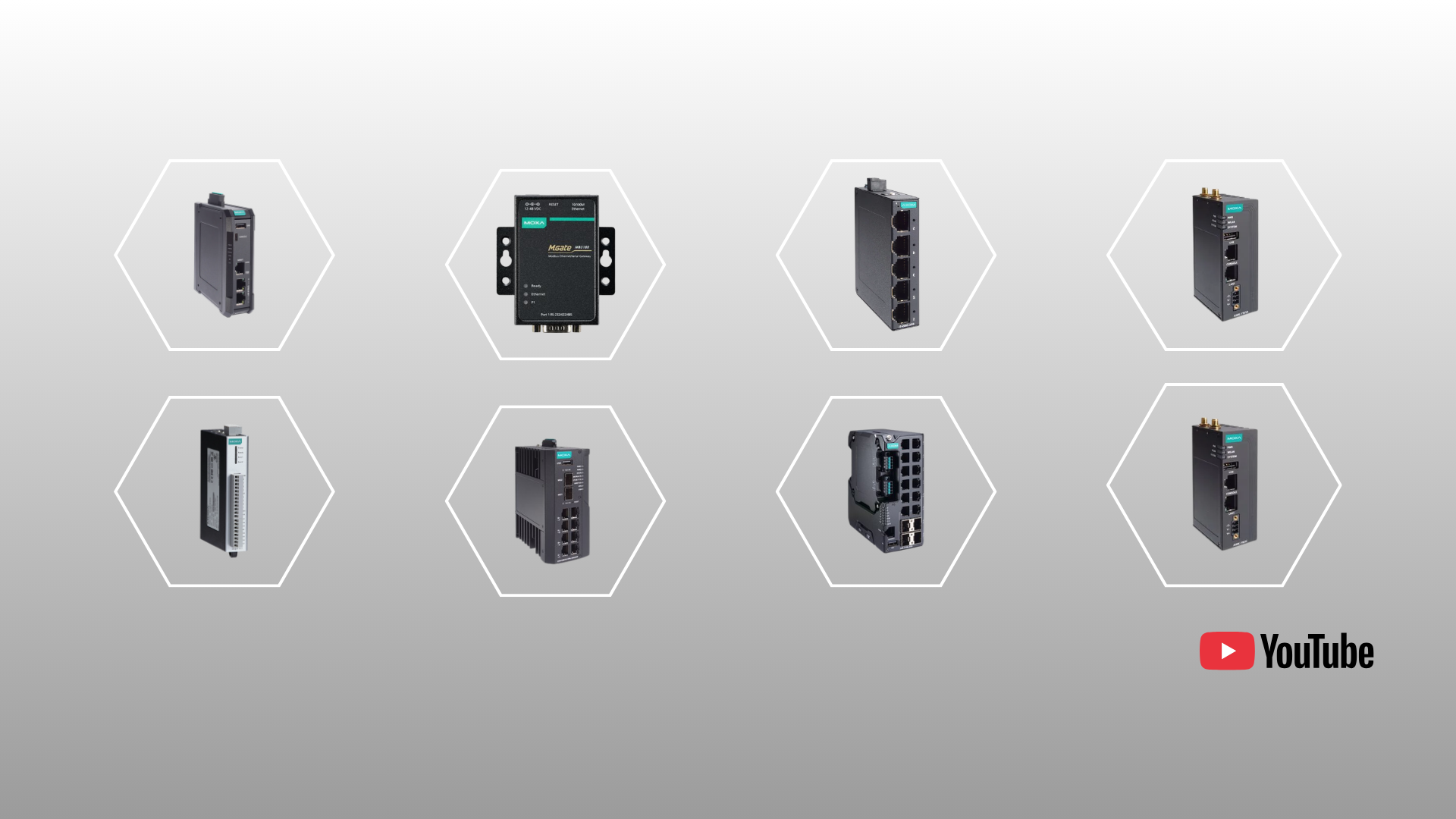
Moxa Booth at SEMICON 2026: Industrial Networking for Smart Manufacturing
Modern semiconductor manufacturing relies on robust, perfectly orchestrated network architectures. At SEMICON 2026, APulsar Technology engineer Zhen Hao took a deep dive into Moxa’s dedicated showcase to break down exactly how these complex systems are built from the ground up. Whether you are scaling an existing facility or integrating new smart manufacturing environments, this guide demystifies the network layers and demonstrates how the right hardware and software combinations seamlessly tie operations together.
Overview
Building a resilient industrial network requires a comprehensive ecosystem of devices that seamlessly bridge the gap between the factory floor and the management office. The showcase outlines this end-to-end architecture by tracing the exact lifecycle of machine data—from its initial capture at the edge to its final delivery at centralized monitoring platforms. By mirroring the physical and logical layout of real-world production lines, this structured approach clearly defines why each specific component is critical at its respective stage.
Architecture of the Moxa Demo Kit
The booth breaks down the industrial network into functional, interconnected modules.
Rather than treating the infrastructure as a single monolith, the demonstration segments it into dedicated technical zones. This modular setup allows engineers to address distinct operational challenges—such as mobile connectivity, legacy protocol conversion, and overarching cybersecurity—using targeted hardware solutions.
MOXA Industrial Wireless Connectivity
Maintaining a reliable connection for mobile or hard-to-wire equipment is often a major challenge. To address this, the showcase features a dedicated wireless lineup engineered to deliver stable, continuous data flow without sacrificing the strict reliability required in factory settings.
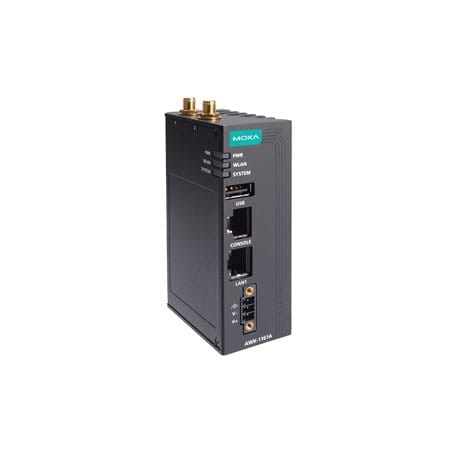
AWK-1161A – An industrial wireless access point built specifically for demanding environments. It provides highly stable and secure Wi-Fi coverage across the factory floor, utilizing modern encryption standards and a wide operating temperature range to survive harsh, continuous operation.
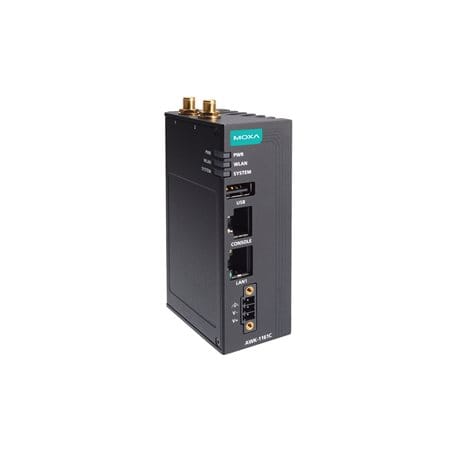
AWK-1161C – Acting as the companion wireless client, this device pairs seamlessly with the access point to extend network reach to unanchored machinery or mobile equipment. This setup grants manufacturers complete architectural flexibility when designing their wireless topologies.
AWK-1161A Series
AWK-1161C Series
Machine Translation and Protocol Conversion
A major practical challenge in any manufacturing environment is interoperability: getting machines that speak entirely different communication languages to share data seamlessly across a unified network. The showcase highlights how to bridge this gap directly at the edge.
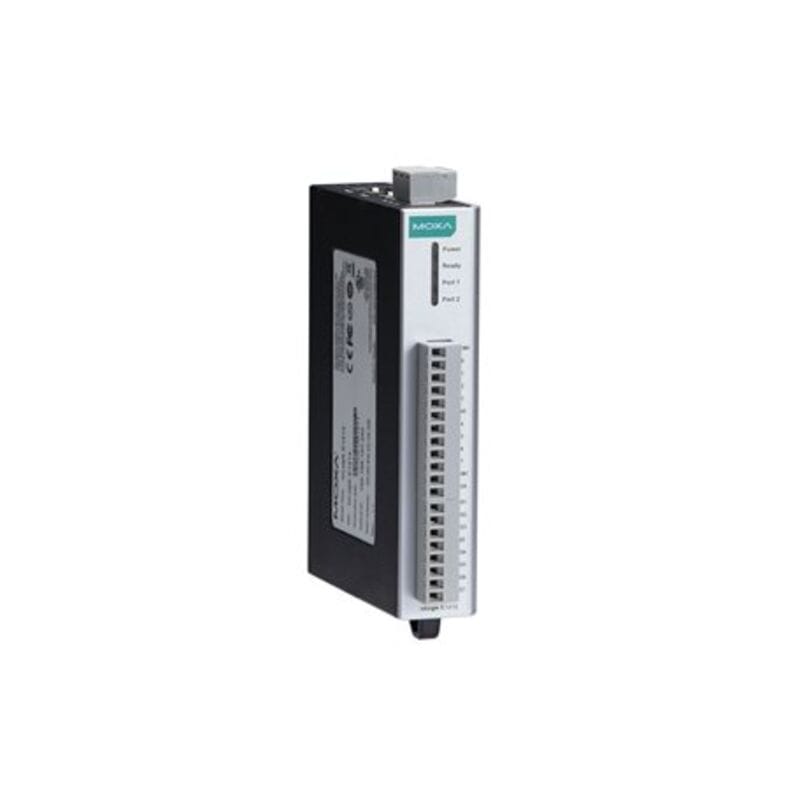
ioLogik-E1210 – This remote I/O device collects signals directly from factory-floor sensors and machine controls, converting raw physical inputs into standardized, network-ready data for overarching systems.
MGate MB3180 – Acting as a critical protocol gateway, this unit translates data between varying industrial communication standards. It allows legacy or proprietary machinery to integrate smoothly with modern network infrastructures, eliminating the need for costly equipment overhauls.
ioLogik E1200 Series
MGate MB3180
Industrial Cybersecurity: Edge and Core Protection
Security is a foundational layer in modern automation, designed to shield production data and equipment from unauthorized access or network-wide disruption. To achieve this, the architecture implements defense-in-depth strategies at multiple levels to prevent anomalies in one plant from spreading to another.
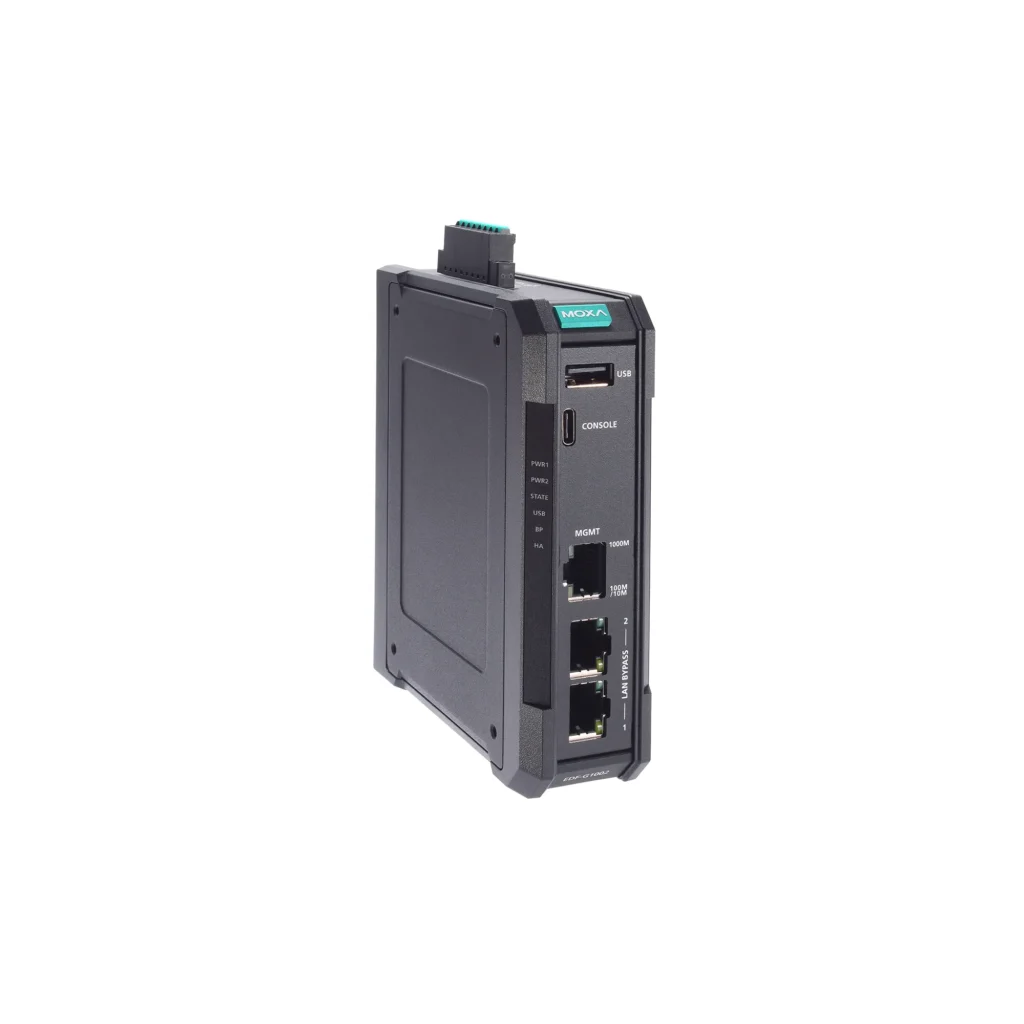
EDF-G1002-BP Series – Positioned directly at the network edge, this device acts as a frontline firewall. It actively filters incoming traffic before it can reach sensitive operational machines or control systems, effectively isolating threats at the local level.
EDR-G9010 – Serving as a secure industrial router, this unit manages complex traffic routing between different production zones. It maintains stringent security policies at the network’s core, ensuring overarching protection across the facility.
EDF-G1002-BP Series
EDR-G9010 Series
Resilient Network Infrastructure
Moving beyond local machine connections, data must be transported reliably across the facility via a robust backbone. This infrastructure relies on high-performance hardware and specialized redundancy protocols to guarantee continuous uptime.
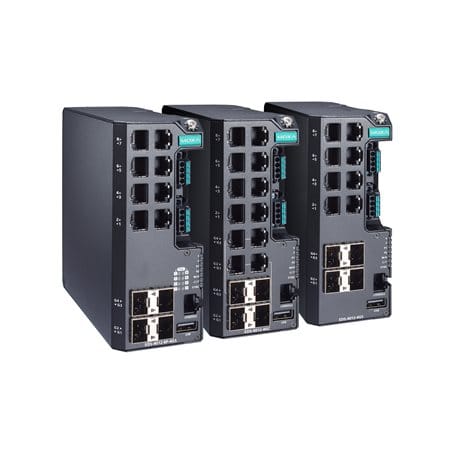
EDS-4012 – This managed industrial Ethernet switch serves as a central building block, aggregating traffic from multiple devices and network segments with consistent, high-speed performance.
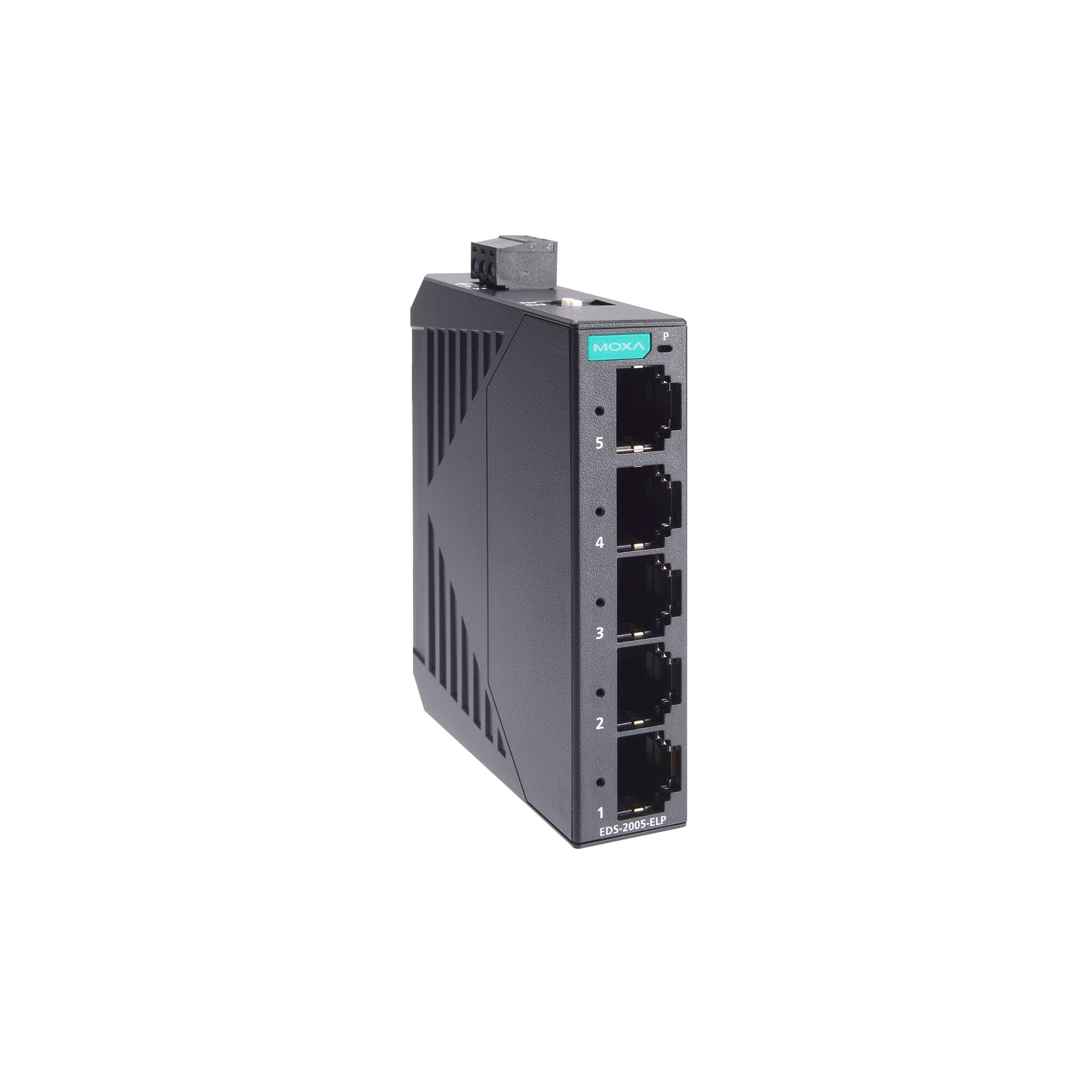
EDS-2005-ELP Series – A compact, unmanaged switch that provides straightforward, plug-and-play connectivity for simpler network segments that do not require advanced traffic management.
EDS-4012 Series
EDS-2005-ELP Series
Moxa Turbo Ring Technology — In industrial environments, downtime is unacceptable. Turbo Ring is a proprietary redundancy protocol embedded within Moxa’s managed switches. If a cable is severed or a connection fails, this technology automatically reroutes network traffic in under 20 milliseconds, ensuring production lines remain operational without noticeable interruption.
Moxa Turbo Ring
Network Management and Visibility
Data collection is only valuable if operators can easily interpret it. The architecture divides visibility into two distinct but complementary layers: the management level for machine performance, and the supervisory level for network health.
At the management tier, operators receive real-time updates on physical machine status—such as temperature alerts or open-door sensors—allowing them to address physical anomalies before they cause production delays. Meanwhile, the supervisory tier empowers IT and OT administrators to monitor overarching network connectivity, bandwidth usage, and potential faults across the entire facility.
To unify these layers, MXview One serves as a centralized network management software. It simplifies the configuration, monitoring, and troubleshooting of distributed devices. Instead of checking multiple isolated dashboards, administrators gain a single, comprehensive view of both machine-level events and complete network topologies.
Moxa MxViewOne
Semiconductor Protocol Integration: SECS/GEM and EtherNet/IP
In semiconductor manufacturing specifically, protocol compatibility is paramount. The architecture accommodates industry-specific standards like SECS/GEM alongside common industrial protocols like EtherNet/IP, ensuring seamless communication between specialized fabrication equipment and factory-wide servers.
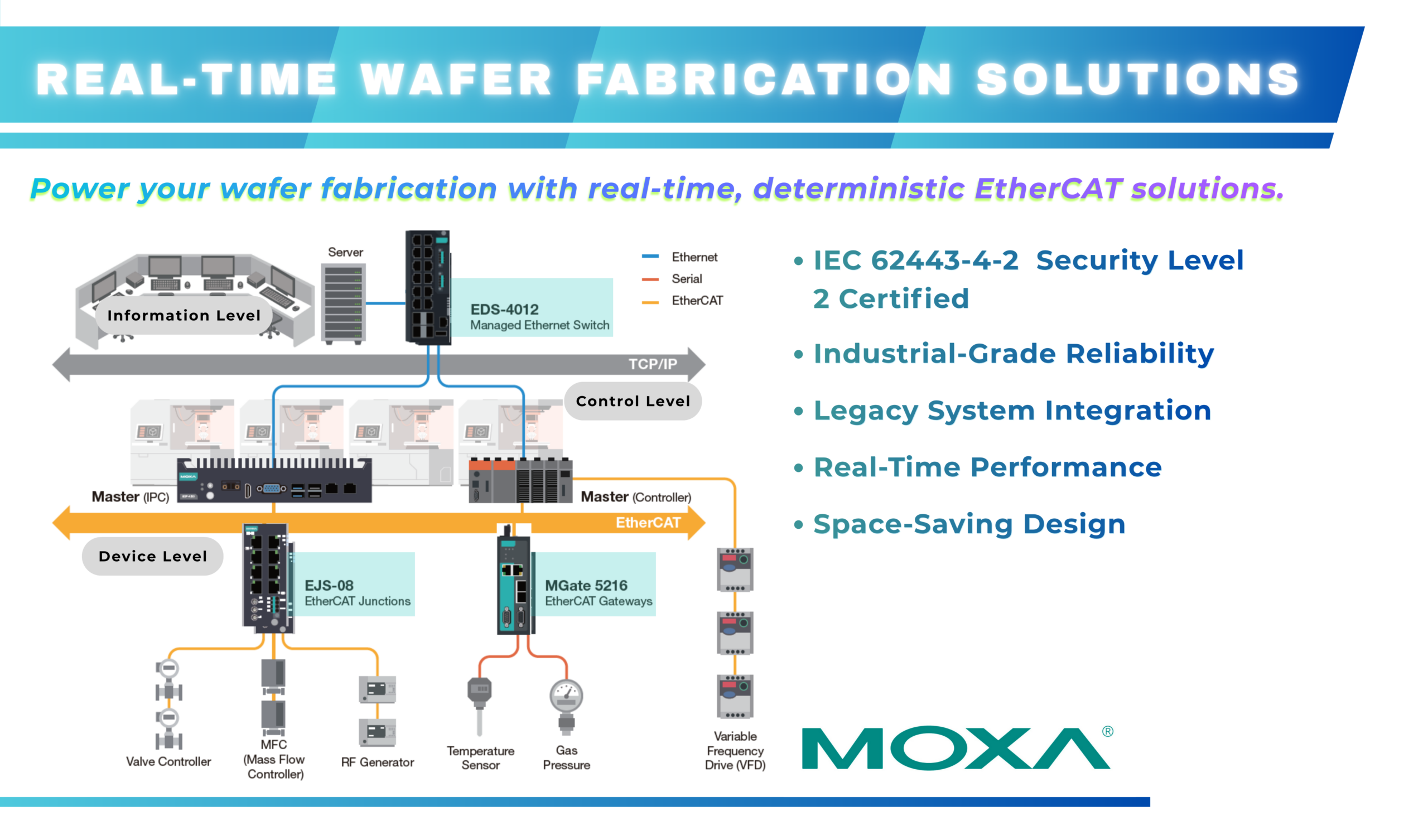
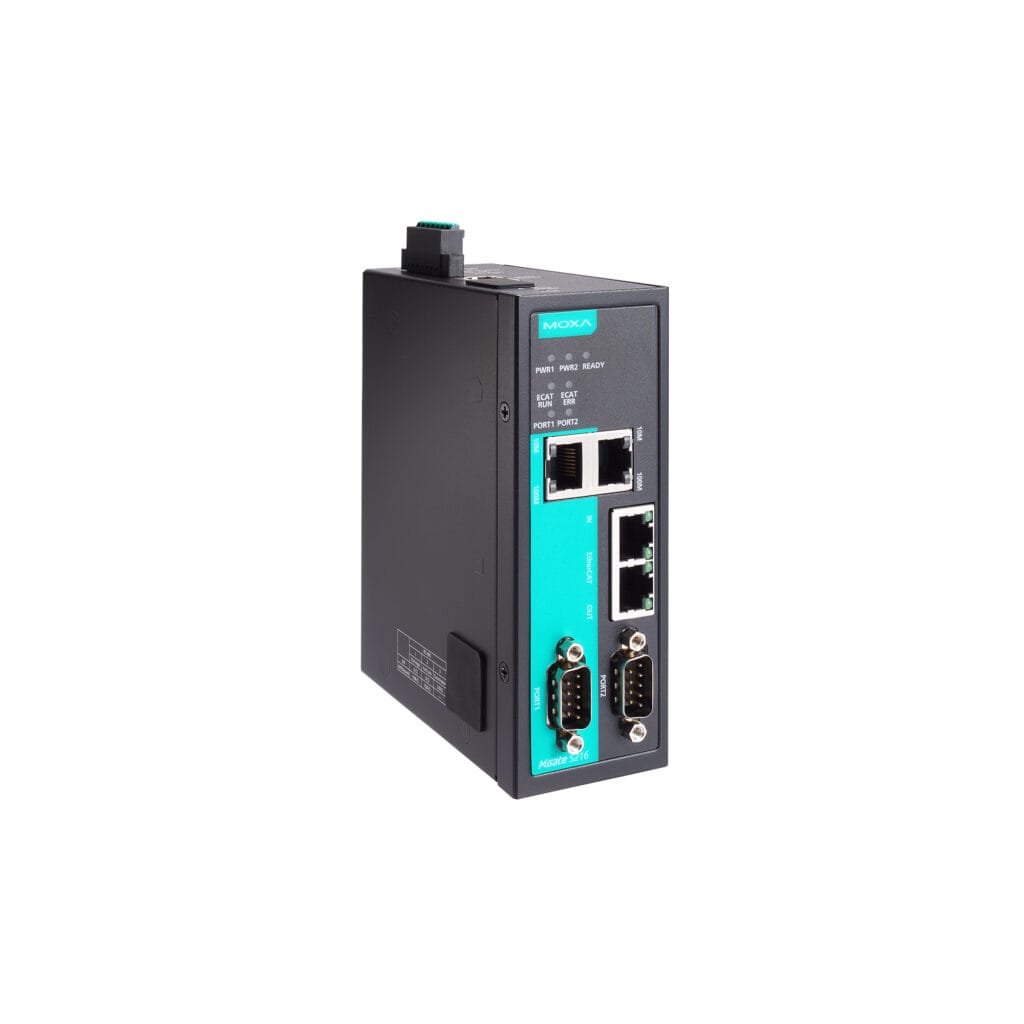
MGate 5216 – This multi-port protocol gateway is engineered for large-scale deployments, managing complex SECS/GEM and industrial protocol conversions simultaneously.
EJS-08 – A highly compact junction switch designed to connect multiple devices and extend Ethernet connectivity into the space-constrained footprints typical of semiconductor production lines.
EDS-4012 (backbone integration) – Reappearing in this context, it handles the heavy lifting of routing these integrated, multi-protocol data streams reliably back to the central servers.
Real-Time Wafer Fabrication Solutions
MGate 5216 Series
EJS-08 Series
EDS-4012 Series
Summary
The Moxa demo kit illustrates a highly structured, end-to-end approach to industrial networking. Starting on the factory floor, wireless access points and client devices ensure flexible connectivity for mobile assets, while advanced gateways translate legacy machine signals into unified protocols. From there, rigorous firewall configurations and secure routing protect sensitive production zones. This data flows through a resilient switch infrastructure, fortified by Turbo Ring redundancy to eliminate costly downtime.
Overarching these hardware layers, unified monitoring platforms like MXview One provide real-time visibility into both physical machine status and network health. When combined with specialised support for semiconductor standards like SECS/GEM, these interconnected components create a secure, scalable, and highly reliable foundation for any modern smart manufacturing environment.
Get in touch!
Reach out to APulsar today to secure these MOXA products at special prices. Our team in Petaling Jaya is ready to assist you with fast delivery across Malaysia.
And if you would like to see more product news like this one, don’t forget to subscribe to our newsletter below!
Newsletter
Keep up our latest news and events. Subscribe our newsletter
Hello 👋 Can we help you?
Open chat
Apulsar.com uses cookies to ensure you get the best experience. By continuing to browse, you agree to our use of cookies. Our privacy policy available here