
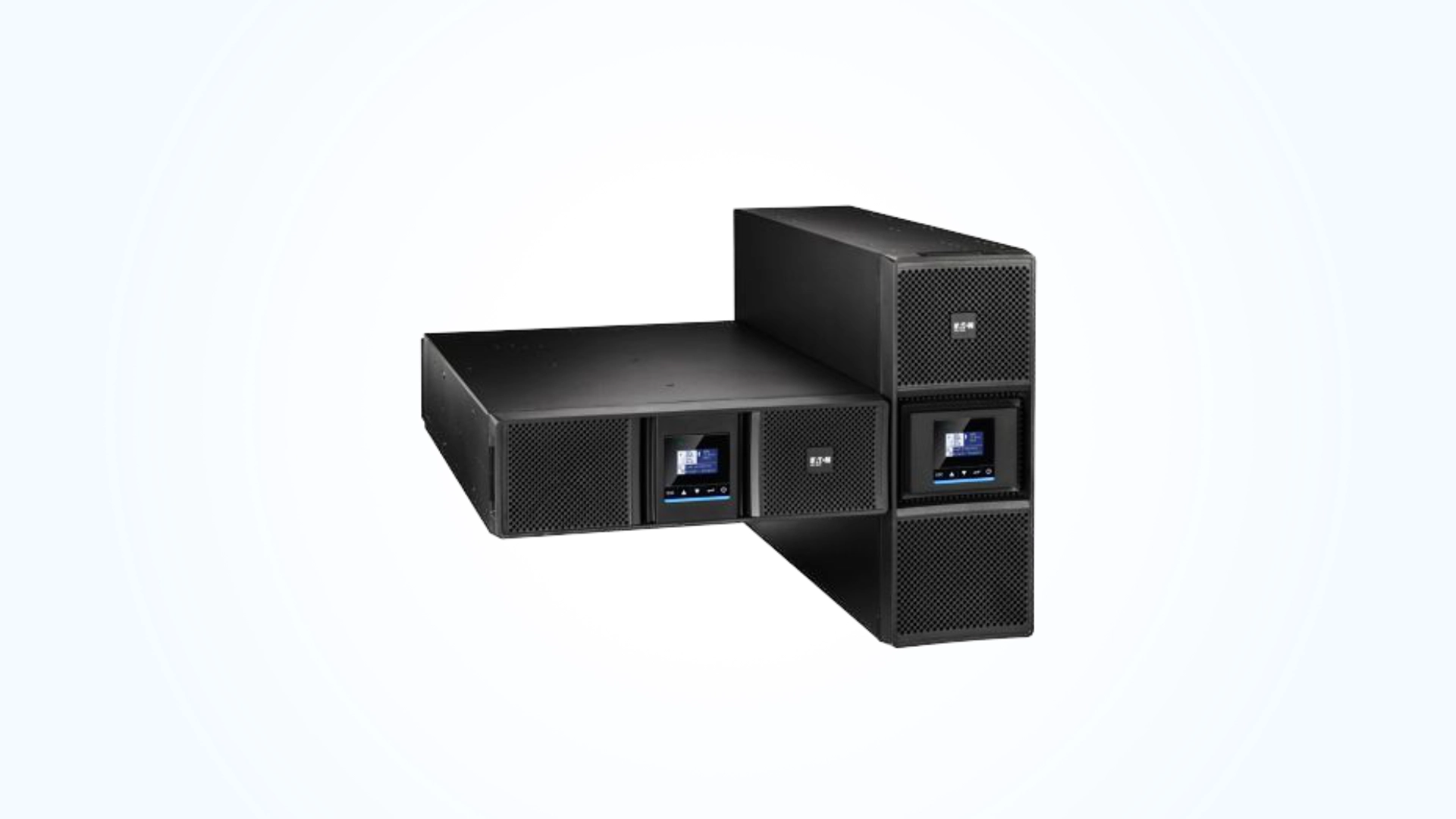
In the fast-paced world of data centers and edge computing, power stability is the silent backbone of every successful operation. Uninterruptible Power Supplies (UPS) are not just oversized backup batteries; they are sophisticated power managers that actively clean and regulate electricity. The Eaton 9SX series has long been a staple in this arena, serving as a reliable bridge between traditional power protection and modern infrastructure. However, as physical rack space becomes more expensive and cyber threats grow more sophisticated, IT hardware must adapt. And this is why Eaton 9SX Gen 2 was born.
Here is a look at how the acclaimed first-generation Eaton 9SX paved the way for the revolutionary 9SX Gen2, and why these advancements matter to both everyday IT managers and seasoned data centre architects.

What Made the Gen 1 of Eaton 9SX Great
To appreciate the new generation, we must first understand the baseline. The original Eaton 9SX established itself as a formidable successor to the legacy 9130 line by utilising what is known as an online double-conversion topology.
The Foundation of 9SX Series
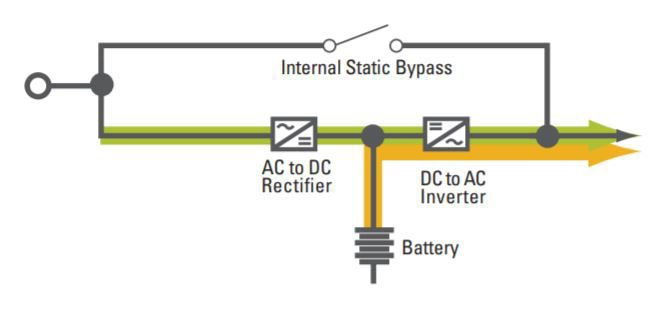
The online double-conversion UPS continuously monitors incoming power and regulates both the voltage and frequency, providing a steady stream of clean electricity regardless of what is happening on the utility grid. It also features an internal static bypass to ensure that service continues uninterrupted even if the UPS suffers an internal fault.
For the technically inclined, the first-generation 9SX was an absolute workhorse, boasting a 0.9 power factor. At the time, this allowed the unit to deliver approximately 28% more real power than many legacy UPS units in its class. It also introduced Eaton’s Advanced Battery Management (ABM®) technology, which replaced traditional constant trickle-charging (a constant voltage feeding a low current to the battery) with an innovative three-stage charging technique.
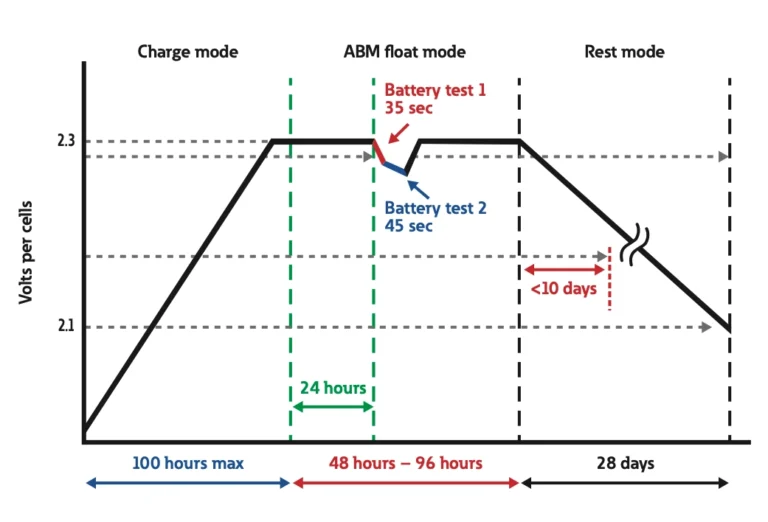
Constant trickle-charging can dry up a battery’s electrolyte and corrode its plates, but ABM avoids this.
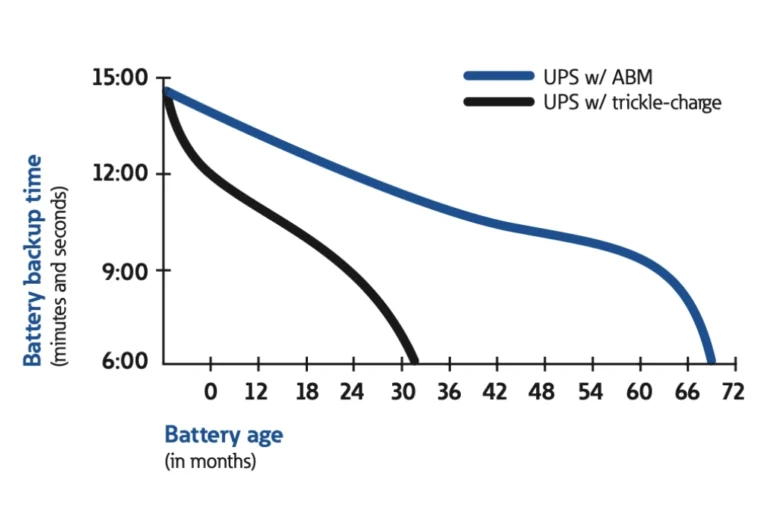
Multi-stage charging increases the service life of UPS batteries by 50% compared with batteries that are constantly trickle-charged.
The Catalyst for Change
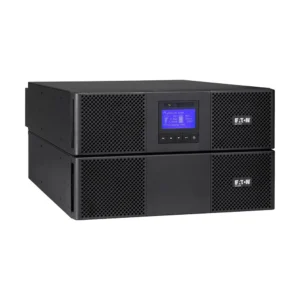
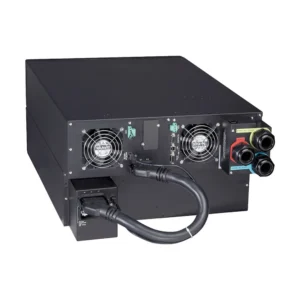
Despite its strengths, the original 9SX eventually faced the realities of modern IT environments. Rack space is incredibly expensive, and the original models required a fair amount of it for higher outputs. For instance, the 11 kVA Gen 1 model delivered 10kW of real power and required 6U of rack space, which consisted of a 3U Power Module plus a mandatory 3U External Battery Module (EBM).
Furthermore, while standard ABM technology extended battery life, it could not precisely predict exactly when a battery was going to fail.
The Eaton 9SX Gen 2 Leap
As technology evolves, it becomes possible to make a great product even better. While the original 9SX series set a high standard, modern IT environments now demand smaller footprints, greater deployment flexibility, and tighter network integration. The Eaton 9SX Gen 2 lineup introduces significant structural advancements to meet these needs, which are detailed below.
Doing More with Less Space
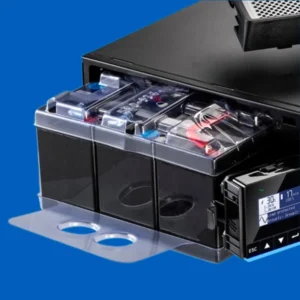
The most striking improvement in the Eaton 9SX Gen2 — specifically within the 5 to 11kW range — is its incredible power density. Rather than relying on a mandatory 3U External Battery Module (EBM) like the previous generation’s 8-11kVA setup, Eaton engineers managed to integrate the batteries directly into the main UPS chassis. By cleverly housing 20 internal batteries within the 8kW & 11kW models and 15 batteries within the 5kW & 6kW model, they completely eliminated the massive “3U plus 3U” architecture. The result is a highly optimized footprint: Eaton packed a full 11kW of power into a mere 4U of rack space, and 6kW into just 3U.
This increased power density is driven by a shift to a 1.0 (or 1:1) unity power factor. Unlike the previous generation, an 11 kVA Gen2 model now delivers a full 11 kW of real power. This translates to an approximate 11% increase in raw power output over its predecessor, all while drastically shrinking its physical footprint.
Smarter Operations and Elite Efficiency
For those managing the bottom line, energy efficiency is a key consideration. Thanks to the integration of new-generation power electronics components, the 11kW Gen 2 unit achieves an efficiency rating of up to 97.2% in online double-conversion mode. This allows the Eaton 9SX Gen 2 line to earn an Energy Star qualification and significantly reduce both utility bills and cooling costs in the server room.

Battery management also received a massive “smart” upgrade with the introduction of ABM+ technology. Moving beyond simply preserving battery life, ABM+ utilizes predictive analytics and machine learning based on actual usage conditions. This allows the system to pinpoint a battery’s exact health and intelligently recommend the best time for a hot-swap replacement. Crucially, when the system triggers this predictive warning, IT teams are given a full two-month window to procure and swap the batteries while ensuring optimal operation and reliability. This entirely removes the guesswork from maintenance, preventing unexpected downtime and eliminating the expense of replacing batteries prematurely.
Cybersecurity and Streamlined Connectivity
In today’s landscape, a UPS must be as secure as the servers it protects. The 9SX Gen2 tackles this head-on through its compatibility with the optional Gigabit Network Card (NM3). This card provides robust cybersecurity utilising a zero-trust architecture, complying with the most stringent UL and IEC cybersecurity standards. Through this card and Eaton’s Brightlayer Data Centers software suite, IT teams can securely manage their entire install base remotely, executing seamless firmware upgrades and adjusting UPS settings without ever stepping foot in the server room.
Finally, the Gen 2 drastically simplifies physical connectivity. While Gen 1 offered physical outlets on specific 5 and 6kVA Rack/Tower models, it left the Tower versions and all higher-capacity 8 and 11kVA units reliant solely on basic terminal blocks. The Gen2 eliminates this restriction by integrating more native outlets directly onto the unit. The 5/6kVA models now come with 3xC19 and 8xC13 outlets, while the 8/11kVA models feature 4xC19 and 8xC13 outlets. All variations are equipped with the terminal block as well. This combination provides immediate flexibility for connecting modern IT equipment.
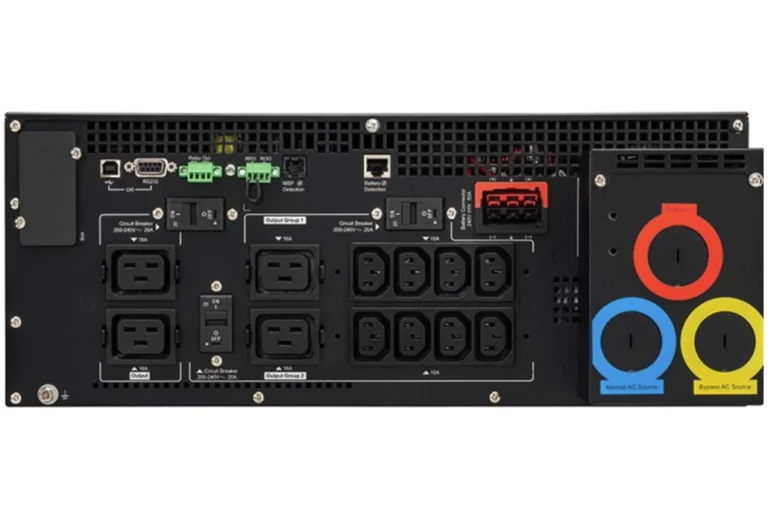
Comparison between Eaton 9SX Gen 1 vs. Eaton 9SX Gen 2 (5–11kW Range)
To summarize the jump between generations, here is how the specifications stack up side-by-side:
Eaton 9SX Gen 1 vs 9SX Gen 2 — Comparison Table
| Feature | Eaton 9SX (Gen 1) | Eaton 9SX (Gen 2) |
|---|---|---|
| Power Factor | 0.9 (e.g., 11kVA = 10kW) | 1.0 Unity (e.g., 11kVA = 11kW) |
| Efficiency | Up to 95% | Up to 97.2% (Energy Star Qualified) |
| Power Density | 8kVA & 11kVA required 6U of space | High Density: 11kW in 4U / 6kW in 3U |
| Battery Management | ABM (3-stage charging) | ABM+ (Predictive Analytics & Machine Learning) |
| Mandatory EBM | At least one (8/11kVA models) | Not needed (Internal batteries) |
| Network Security | Optional Network-M2 card | Gigabit NM3 (Optional) Zero-Trust Architecture Brightlayer Integration |
| Outlets (5/6kVA RT models) | 2xC19 + 8xC13 Terminal Block | 3xC19 + 8xC13 Terminal Block |
| Outlets (8/11kVA models) | Terminal Block Only (Hardwired) | 4 C19 + 8 C13 Terminal Block |
Key Operational Upgrades in Eaton 9SX Gen 2
- Optimized Power Density: The Gen 2 doesn’t just deliver 11% more active power; it does so in a drastically smaller footprint. Condensing the 11kVA architecture from a massive 6U down to 4U frees up vital rack space for actual server hardware rather than power infrastructure.
- Peak Energy & Thermal Efficiency: Achieving up to 97.2% efficiency in online double-conversion mode does more than secure an Energy Star qualification. This massive reduction in waste heat directly lowers facility cooling costs and reduces the total cost of ownership over the unit’s lifespan.
- Intelligent Battery Prediction (ABM+): While standard ABM extended battery life, ABM+ introduces machine learning. By analysing actual site conditions, it replaces maintenance guesswork with predictive analytics—providing that crucial two-month warning window to schedule a hot-swap replacement.
- Universal Plug-and-Play Connectivity: Eliminating previous design restrictions, Gen 2 standardises convenience by integrating physical C13 and C19 outlets across the entire lineup, ensuring even the larger 8/11kVA units are immediately ready for modern IT equipment alongside standard terminal blocks.
- Future-Proof Cybersecurity: Native compatibility with the optional Network-M3 Gigabit card provides a fully cybersecured gateway. This allows IT teams to safely execute remote monitoring and over-the-air firmware updates without exposing the power infrastructure to external network vulnerabilities.
Conclusion
Whether you are a facility manager looking to trim cooling costs or an IT architect designing a high-density, cyber-secure edge network, the transition from the Eaton 9SX Gen 1 to Gen2 represents a pivotal shift. By combining a 1:1 unity power factor, 97.2% efficiency, the predictive machine learning of ABM+, and uncompromising network security, the Gen2 proves that you do not have to sacrifice reliability to achieve a smaller, smarter footprint.
Get in touch!
The APulsar team hopes that this article has been insightful for you. Anytime you need advice, assistance, or technical support — just contact us.
And if you would like to see more useful guides like this one, don’t forget to subscribe to our newsletter below!

This is the heading
Lorem ipsum dolor sit amet, consectetur adipiscing elit. Ut elit tellus, luctus nec ullamcorper mattis, pulvinar dapibus leo.